


2026-06-05
Day–night confusion in newborns: gentle fixes that work with biology
Why newborns party at night, what helps (light, activity, feeds), and what not to stress about in the first weeks—plus when to ask your clinician about extreme fussiness.
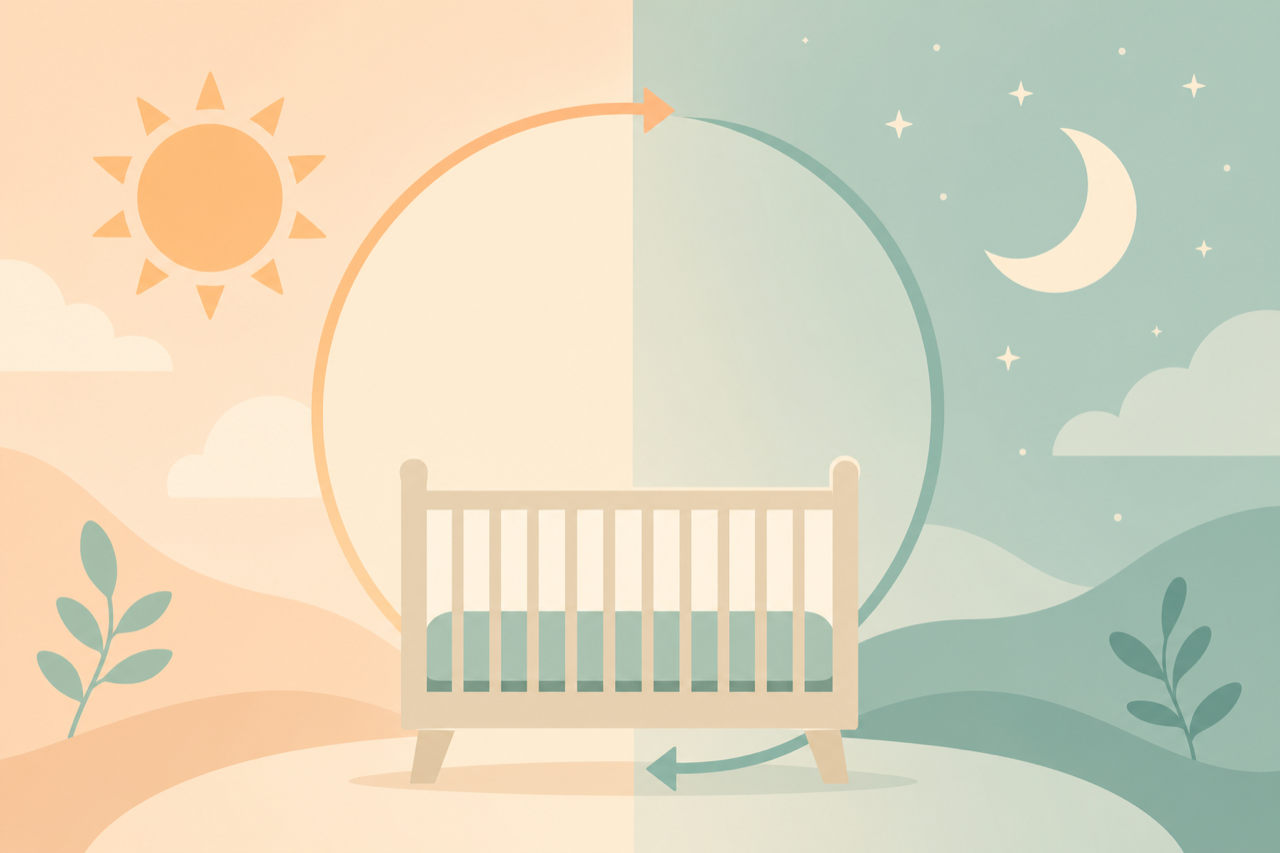
If your newborn seems wide awake at midnight and deeply asleep at noon, you are seeing a very common pattern: circadian rhythm is still forming. That does not mean you must “train” a newborn aggressively—it means you can support biology with gentle, repeatable daytime and nighttime differences.
What day–night confusion is (and is not)
It is not a diagnosis. It is a plain-language label parents use when nights feel upside-down. Many babies still take several weeks to consolidate more sleep into nighttime hours, especially if daytime naps happen in a very dark, very quiet room for many hours.
Daytime signals that help
- Light: natural daylight during awake windows; avoid turning the whole house into “cave mode” all day.
- Activity: gentle play, tummy time, carrying, and social engagement when baby is alert.
- Feeds on cue: frequent daytime feeds can reduce frantic cluster feeding that only happens at night—sometimes.
Nighttime signals that help
- Lower stimulation: slower hands, quieter voices, boring diaper changes.
- Predictable short routine: same order nightly, even if sleep is still short.
A one-week experiment (gentle, not rigid)
| Daytime | Nighttime |
|---|---|
| More light + interaction in awake windows | Dimmer environment after your chosen “evening start” |
| Keep wake windows as a flexible guide | Protect caregiver sleep with partner shifts when possible |
If fussiness is extreme, feeding drops, or you worry about illness, contact your clinician. For general newborn care context, see the NHS guide to looking after a newborn.
Logging without perfectionism
A log is memory support for a sleep-deprived brain. Miss a night? Pick it up tomorrow. Approximate times and one-line context (“vaccine day,” “guests,” “cold”) often explain spikes that looked random in the moment.
Apps suggest; caregivers decide
Any schedule suggestion is only as good as the data and context you bring: illness, travel, and temperament all matter. If something feels medically off, trust your clinician—not a blog headline or a single metric.
Safe sleep defaults repeat on tired nights
When exhaustion hits, the safest plan is the one you can return to without thinking: firm flat surface intended for sleep, smoke-free air, and an environment that matches your local guidance. Ask your midwife or pediatric clinician for written resources you trust.