


2026-06-23
Activities for a 6-month-old baby: play ideas for a newly curious explorer
What a 6-month-old can do and enjoy, practical play activities to fill wake windows well, and how active daytime play supports better sleep at night.
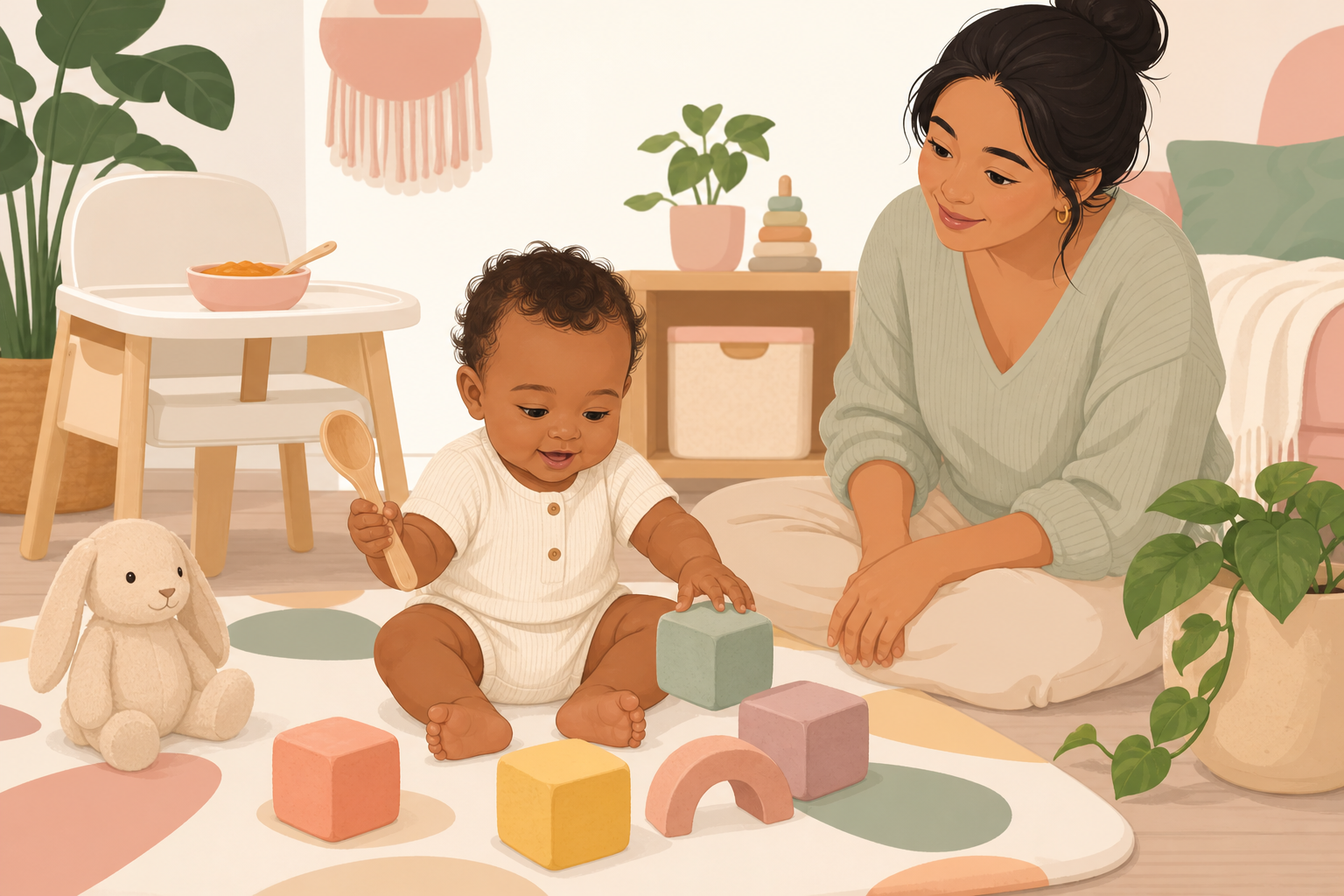
Six months is a meaningful developmental milestone. Many babies can now sit independently—at least briefly—have found rolling, and are on the cusp of everything crawling eventually becomes. They are usually starting solid foods, or close to it. They have clear preferences, clear protests, and a genuine sense of humour.
Wake windows at six months are typically 2–3 hours, and the variety of activities you can offer has expanded considerably compared to the newborn months.
What a 6-month-old can typically do
- Sit independently for short stretches (many need support for longer sessions)
- Roll in both directions reliably
- Bear weight on legs when held standing
- Pick up objects with a raking grasp
- Babble consonant-vowel sounds ("ba," "da," "ga")
- Look for fallen objects—beginning of object permanence
- Show stranger awareness or clear caregiver preference
- Begin exploring solid foods (for families who have started)
The play-sleep connection at 6 months
At this age, babies are beginning or in the middle of the gradual transition from three naps to two. Wake windows are longer, and the quality of what fills them genuinely matters for how much sleep pressure builds before each nap.
A well-spent wake window typically includes some physical activity (rolling, supported standing, floor exploration), some social interaction (games, conversation, reading), and a clear wind-down in the final 15–20 minutes. Babies who have been passive during wake windows—in a bouncer, in front of screens—often have more difficulty settling because physical and cognitive stimulation have been insufficient to build sleep drive.
Play ideas that work at 6 months
Independent floor play
Set up a small area on a play mat with a few different toys and let baby explore. At six months, many babies can sit, reach in multiple directions, and roll to get to a toy. This is independent play at its most achievable: nearby presence is enough, you do not need to facilitate every moment.
Supported standing
Hold baby in a standing position against your legs or a low, stable surface and let them bounce and bear weight. Many babies love this intensely at this stage. It is also excellent for leg strength.
Cause-and-effect toys
Simple toys that do something when touched—a button that makes a sound, a pop-up toy—are compelling at six months because the connection between action and result is just becoming comprehensible. A simple rattle that responds to shaking is sufficient; no need for complex electronic toys.
Solid food exploration
If your baby has started solids, mealtimes are play too. Letting baby touch, squish, and explore soft foods on a high chair tray builds tactile awareness, fine motor skills, and a positive relationship with food. Expect mess—and welcome it.
Water play
In a shallow basin with very close supervision, letting baby splash and feel moving water is sensory-rich and new at this age. Even making bath time playful counts.
Reading and book handling
Board books can now be in baby's hands. Expect them to be mouthed, dropped, and banged more than read—this is appropriate. Books with photographs of real babies, animals, and high-contrast images remain popular.
Social games
Peek-a-boo, "where did it go?", and exaggerated naming games delight six-month-olds. The social side of play is deepening: baby will now look at your face to gauge your reaction, laugh at your laughing, and begin initiating some games themselves.
Outdoor time
A blanket outside, time in a garden, or watching people and movement from a safe position provides qualitatively different sensory input from indoor environments. Many families find that including an outdoor period during the day supports sleep consolidation—partly through circadian light exposure, partly through the calming effect of fresh air and lower-stimulation environments.
Starting solids and digestion
If you are beginning solids, note that digestive changes sometimes temporarily affect sleep—gas, new stool patterns, or unfamiliar fullness can all cause slightly disrupted nights for a week or two. This is usually short-lived. See the article on starting solids and sleep for more detail.
Overstimulation at 6 months
Six-month-olds manage stimulation better than younger babies—but they still have clear limits. Watch for:
- Repeated gaze aversion: looking persistently away from an activity or your face
- Fussing that begins during play, not despite inactivity
- Heavy eye rubbing or yawning mid-activity
- Sudden crying after a busy stretch
The wind-down window before sleep matters as much at six months as it did at three. Dimming lights, slowing movement, and shifting to quieter activities in the final 15–20 minutes of a wake window helps the nervous system gear down for sleep.